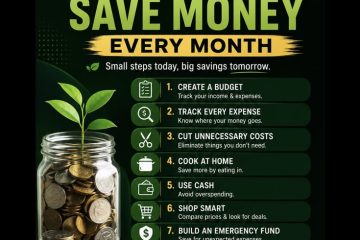
Managing money effectively is one of the most important skills everyone should develop. Whether you are a student, employee, business owner or freelancer, knowing how to handle your income can help you avoid unnecessary financial stress and build a more secure future.
Many people earn money but still struggle financially because they do not have a clear plan for spending, saving and managing their expenses. Without proper money management, it can become difficult to pay bills, handle emergencies, achieve personal goals or prepare for the future.
The good news is that managing your money does not require earning a large salary. It starts with understanding how much you earn, knowing where your money goes and making better financial decisions.
In this article, you will discover practical ways to manage your money effectively, develop healthy financial habits and make your income work better for you.
1. Understand Your Income
The first step to managing your money effectively is understanding how much you earn.
Your income is the money you receive from your job, business, investments, freelance work or other sources. Before making financial decisions, you should know your total monthly income.
For example, if you earn money from a full-time job and also receive additional income from a side business, calculate both sources to understand your actual earnings.
Knowing your income helps you determine how much you can reasonably spend, save and invest.
It is also important to distinguish between your gross income and net income. Gross income is what you earn before deductions, while net income is what remains after applicable deductions.
Practical tip: Write down all your income sources and calculate how much money you actually receive each month.
2. Create a Monthly Budget
Creating a monthly budget is one of the most effective money management strategies.
A budget is a financial plan that shows how you intend to use your income within a specific period. It helps you organize your expenses and prevents unnecessary spending.
Without a budget, you may spend money without realizing how quickly it disappears.
To create a simple budget:
- Calculate your total monthly income.
- List your essential expenses.
- Identify your non-essential expenses.
- Decide how much you want to save.
- Allocate money to each spending category.
- Review your budget regularly.
One popular budgeting method is the 50/30/20 rule. It divides your after-tax income into three categories:
- 50% for needs, such as food, housing and transportation.
- 30% for wants, such as entertainment and shopping.
- 20% for savings and debt repayment.
For example, if your monthly income is ₦200,000, an illustrative budget could look like this:
| Category | Percentage | Amount |
|---|---|---|
| Needs | 50% | ₦100,000 |
| Wants | 30% | ₦60,000 |
| Savings and debt repayment | 20% | ₦40,000 |
These percentages are only a starting point. You can adjust them depending on your income, responsibilities and financial priorities.
3. Track Your Spending
Tracking your expenses helps you understand where your money goes.
Many people focus on how much they earn but pay little attention to how they spend it. Small purchases can accumulate and take a significant portion of your income.
For example, buying snacks, ordering food, subscribing to entertainment services and making frequent unnecessary purchases may seem harmless individually. However, when combined, these expenses can affect your ability to save.
You can track your spending using:
- A notebook or personal expense diary.
- A spreadsheet.
- A budgeting application.
- Your bank transaction history.
At the end of each week, review your spending and identify areas where you can reduce expenses.
The goal is not to stop enjoying your money. It is to spend intentionally and avoid wasting money on things that do not add value to your life.
4. Build an Emergency Fund
An emergency fund is money set aside specifically for unexpected expenses.
Life is unpredictable. You may experience a medical emergency, lose your job, need urgent repairs or face an unexpected financial responsibility.
Without emergency savings, you may have to borrow money or use funds meant for other important purposes.
Start by saving a small amount regularly. You do not need to build a large emergency fund immediately.
A useful long-term target is to save enough to cover three to six months of essential living expenses. However, your target should depend on your income stability and personal responsibilities.
Keep emergency savings somewhere safe and accessible, while avoiding unnecessary withdrawals.
Remember: Emergency savings are for genuine unexpected needs, not regular shopping or entertainment.
5. Avoid Unnecessary Debt
Debt can become a major financial problem when it is not managed properly.
Borrowing money may sometimes be necessary, but taking loans for unnecessary purchases can create financial pressure.
Before borrowing, ask yourself:
- Do I really need this loan?
- Can I afford the repayment?
- What is the interest rate?
- Are there additional charges?
- What happens if I miss a payment?
Always understand the repayment conditions before accepting a loan.
If you already have multiple debts, list them according to their outstanding balances, interest rates and repayment dates.
You can consider paying extra toward high-interest debt while maintaining the minimum required payments on other debts.
Avoid borrowing more money simply to maintain an expensive lifestyle.
6. Set Clear Financial Goals
Financial goals give your money a purpose.
Instead of saving without a specific reason, decide what you want to achieve and how much money you need.
Examples of financial goals include:
- Saving for school fees.
- Buying a laptop or smartphone.
- Starting a business.
- Building an emergency fund.
- Paying off existing debt.
- Saving for a house or car.
- Preparing for retirement.
Your goals should be realistic and measurable.
For example, instead of saying, “I want to save money,” set a goal such as, “I want to save ₦100,000 within five months.”
This gives you a clear target and helps you calculate how much you need to save each month.
You can divide your goals into three categories:
Short-term goals: Goals you want to achieve within a year.
Medium-term goals: Goals that may take one to five years.
Long-term goals: Goals that may take more than five years.
Review your goals regularly and adjust them when your financial situation changes.
7. Save Money Consistently
Saving money is an important part of effective financial management.
You should not wait until you have a large income before developing a saving habit. Even small amounts can make a difference when saved consistently.
One helpful approach is to save a portion of your income immediately after receiving it instead of waiting until the end of the month.
You can also automate transfers into a separate savings account if your bank supports this feature.
Here are some practical ways to save more:
- Reduce unnecessary subscriptions.
- Prepare a shopping list before visiting stores.
- Compare prices before purchasing items.
- Avoid impulse buying.
- Set a weekly spending limit.
- Save bonuses and unexpected income where possible.
Consistency matters more than starting with a large amount.
8. Spend Less Than You Earn
One basic principle of money management is to spend less than you earn.
If your expenses consistently exceed your income, you may find yourself borrowing money or struggling to meet financial responsibilities.
For example, someone who earns ₦250,000 monthly but spends ₦280,000 is operating beyond their income.
Over time, this can create debt and financial stress.
To avoid this situation, prioritize essential expenses and reduce spending that does not support your needs or goals.
You can also look for ways to increase your income through additional work, freelancing, business activities or professional development.
Remember that increasing your income is helpful, but controlling your expenses is equally important.
9. Learn About Saving and Investing
Saving and investing are both important, but they serve different purposes.
Saving generally involves keeping money in a relatively accessible and lower-risk place for short-term needs or future expenses.
Investing involves putting money into assets with the aim of achieving potential returns over time. Examples include stocks, bonds and regulated investment funds.
However, investments carry risks, and their value can rise or fall. You should understand an investment before putting your money into it.
Before investing:
- Build some emergency savings.
- Understand your financial goals.
- Research the investment.
- Learn about possible risks and fees.
- Check whether the provider is properly regulated.
- Avoid schemes promising guaranteed high returns.
Never invest money you cannot afford to lose in a risky investment.
Financial education can help you make more informed decisions about growing your money.
10. Review Your Financial Progress Regularly
Managing money is not something you do once and forget. Your financial situation can change, so your plans should be reviewed regularly.
At the end of every month, take time to examine your income, expenses, savings and debts.
Ask yourself:
- Did I follow my budget?
- How much did I save?
- Which expenses were unnecessary?
- Did I make progress toward my financial goals?
- What should I improve next month?
Reviewing your financial progress helps you identify mistakes and make better decisions.
You can also compare your current financial position with previous months to understand whether your habits are improving.
Common Money Management Mistakes to Avoid
Even people who earn good money can experience financial difficulties when they develop poor spending habits.
Here are some common mistakes to avoid:
1. Spending without a budget: Without a spending plan, it becomes easier to waste money.
2. Ignoring small expenses: Frequent small purchases can become significant over time.
3. Failing to save: Spending all your income leaves little protection against unexpected expenses.
4. Taking unnecessary loans: Borrowing for things you do not need can create avoidable financial pressure.
5. Impulse buying: Purchasing items without considering your budget can affect your financial goals.
6. Ignoring financial education: Not understanding interest rates, savings, debt and investments can lead to poor financial decisions.
7. Depending on one income source: Where possible, developing additional income skills can improve financial stability.
Benefits of Managing Your Money Effectively
Good money management can improve different areas of your life.
Some important benefits include:
- Better financial control: You understand where your money comes from and where it goes.
- Reduced financial stress: Planning helps you prepare for expenses.
- Improved saving habits: You become more consistent about setting money aside.
- Less unnecessary debt: You make more careful borrowing decisions.
- Progress toward financial goals: Your money is directed toward specific objectives.
- Greater financial security: Emergency savings can help you handle unexpected situations.
- Better future planning: You can prepare for major expenses and long-term needs.
Frequently Asked Questions (FAQs)
1. What is the best way to manage money?
The best way to manage money is to create a realistic budget, track your expenses, save consistently, avoid unnecessary debt and review your financial progress regularly.
2. How can I manage my money on a low income?
Start by prioritizing essential expenses, tracking your spending, reducing unnecessary purchases and saving whatever amount is realistically affordable. You can also explore opportunities to increase your income.
3. How much of my income should I save?
The amount depends on your income, expenses and financial responsibilities. The 50/30/20 budgeting method suggests allocating 20% toward savings and debt repayment, but you can begin with a smaller percentage if necessary.
4. Why is budgeting important?
Budgeting helps you plan how to use your income, control expenses, reduce unnecessary spending and work toward your financial goals.
5. Should I save or invest my money?
Both can be useful. Savings are generally suitable for emergencies and short-term needs, while investing may help with long-term financial goals. Investments involve risks, so understand them before committing money.
6. How can I stop wasting money?
Track your expenses, avoid impulse purchases, create a shopping list, set spending limits and review your financial habits regularly.
Conclusion
Learning how to manage your money effectively is an important step toward financial stability. You do not need to be wealthy to develop good financial habits. What matters most is understanding your income, controlling your expenses, saving consistently and making thoughtful financial decisions.
Start with simple steps such as creating a monthly budget, tracking your spending and setting realistic financial goals. As you become more disciplined, you will find it easier to manage your income and prepare for future responsibilities.
Remember that effective money management is a continuous process. Small improvements in your financial habits today can make a meaningful difference in the future.
Start managing your money wisely today, and take control of your financial future.