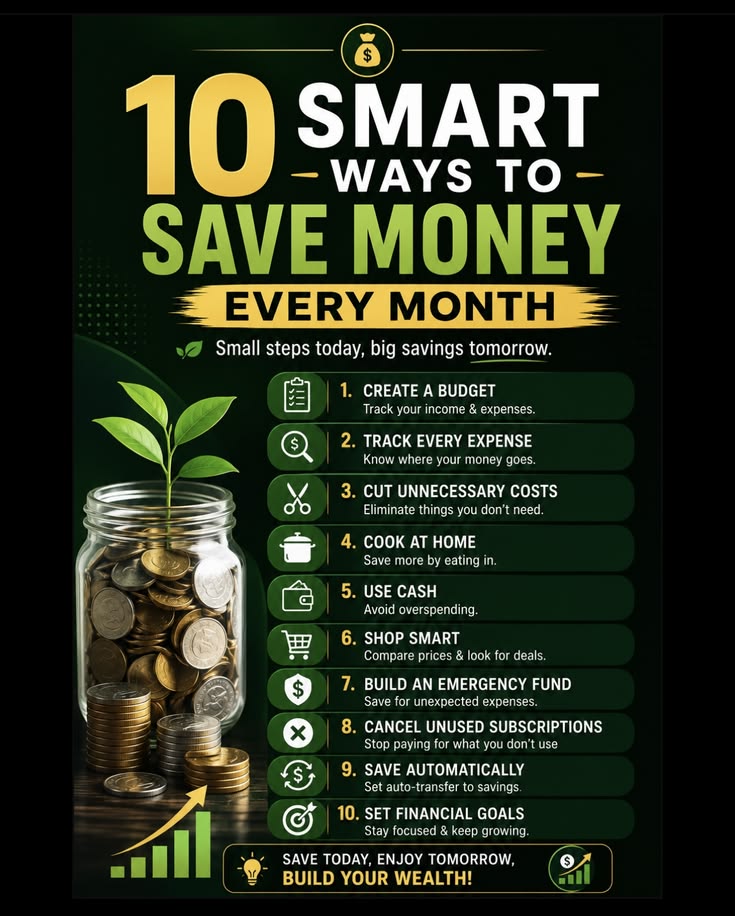
Saving money is one of the most important financial habits everyone should develop. Whether you are a student, employee, freelancer or business owner, having money set aside can help you prepare for unexpected expenses, achieve personal goals and build a more secure financial future.
However, saving money is not always easy. Rising living costs, daily expenses, unexpected bills and poor spending habits can make it difficult to put money aside at the end of the month.
Many people believe that saving money requires earning a high salary. In reality, you can start saving with almost any income. The most important things are discipline, consistency and having a clear financial plan.
Developing smart money-saving habits can help you control your spending and make better financial decisions. You do not have to stop enjoying life or avoid everything you want to buy. Instead, you need to understand your priorities and find practical ways to reduce unnecessary expenses.
In this article, we will explore 10 smart ways to save money every month, including simple budgeting strategies, spending habits and practical tips that can help you improve your financial situation.
1. Create a Monthly Budget
Creating a monthly budget is one of the most effective ways to save money.
A budget is a financial plan that helps you decide how to use your income. It allows you to understand how much money you receive, how much you spend and how much you can save.
Without a budget, you may spend money without realizing how quickly it disappears. This can make it difficult to achieve your financial goals.
To create a simple monthly budget:
- Calculate your total monthly income.
- List all your essential expenses.
- Identify unnecessary spending.
- Decide how much you want to save.
- Set spending limits for different categories.
- Review your budget at the end of each month.
For example, if your monthly income is ₦200,000, you might plan to spend ₦120,000 on essential and personal expenses and set aside ₦40,000 for savings, while allocating the remaining amount to other priorities and unexpected costs.
Your budget should reflect your actual responsibilities. The goal is to make sure your spending does not exceed your income.
2. Pay Yourself First
One common mistake people make is waiting until the end of the month before saving money.
Unfortunately, after paying bills, buying groceries and handling other expenses, there may be little or nothing left to save.
A better approach is to pay yourself first.
This means setting aside a portion of your income immediately after receiving it, before spending on non-essential things.
For example, if you earn ₦150,000 monthly, you could decide to save ₦15,000 as soon as your salary arrives.
You can transfer the money into a separate savings account to reduce the temptation to spend it.
Even if you cannot save a large amount initially, start with what you can comfortably afford.
The important thing is to develop a consistent saving habit.
3. Track Your Daily Expenses
Tracking your expenses helps you identify where your money goes.
Many people lose money through small purchases they barely notice. Buying snacks, ordering food, paying for unnecessary subscriptions and making frequent online purchases can gradually affect your savings.
For example, spending ₦1,000 every day on unnecessary items may appear insignificant. However, over 30 days, that becomes ₦30,000.
When you track your spending, you can identify expenses that are reducing your ability to save.
You can monitor your expenses using:
- A notebook.
- A spreadsheet.
- A budgeting application.
- Your bank transaction history.
- A personal finance tracker.
At the end of every week, review your expenses and identify areas where you can make improvements.
Tracking your spending does not mean you should stop enjoying your money. It simply helps you become more intentional about how you use it.
4. Reduce Unnecessary Subscriptions
Subscriptions can become a hidden source of monthly expenses.
Streaming platforms, premium applications, online memberships, gaming services and other subscriptions may automatically deduct money from your account.
Although some subscriptions are useful, paying for services you rarely use can waste money.
Take time to review all your active subscriptions.
Ask yourself:
- Do I use this service regularly?
- Is it necessary?
- Can I find a cheaper alternative?
- Am I paying for multiple services that offer similar benefits?
Cancel subscriptions that no longer provide value.
You do not have to remove every subscription from your life. Focus on keeping the services that are genuinely useful and affordable.
Reducing unnecessary recurring payments can help you save more money without making major lifestyle changes.
5. Avoid Impulse Buying
Impulse buying happens when you purchase something without properly considering whether you need it or can afford it.
It often occurs when people see attractive discounts, advertisements, social media promotions or products they suddenly want.
Although shopping can be enjoyable, frequent impulse purchases can damage your monthly budget.
One useful strategy is the 24-hour rule.
Whenever you want to purchase a non-essential item, wait at least 24 hours before making the decision.
For expensive purchases, you may want to wait longer.
During that period, ask yourself:
- Do I really need this item?
- Does it fit my budget?
- Will I still want it next week?
- Could the money be used for something more important?
You may discover that some purchases are unnecessary.
Learning to control impulse buying helps you protect your savings and make better financial decisions.
6. Plan Your Meals and Shopping
Food is one of the major expenses in many households. Without proper planning, you may spend more money than necessary on groceries, restaurants and food deliveries.
Planning your meals before shopping can help you reduce unnecessary expenses.
Start by creating a weekly meal plan based on your budget and available ingredients.
Then prepare a shopping list and buy only the items you need.
Here are some practical tips:
- Prepare meals at home more often.
- Compare prices before purchasing groceries.
- Buy essential items in reasonable quantities.
- Avoid shopping when you are hungry.
- Reduce unnecessary food deliveries.
- Store food properly to prevent waste.
- Use available ingredients before buying more.
You can also prepare certain meals in advance to reduce the temptation to order expensive food during busy days.
Good meal planning helps you control food expenses while making better use of your money.
7. Set Clear Savings Goals
Saving becomes easier when you know what you are saving for.
Instead of putting money aside without a specific purpose, create financial goals that motivate you to remain consistent.
Examples of savings goals include:
- Building an emergency fund.
- Paying school fees.
- Buying a laptop.
- Starting a business.
- Purchasing a car.
- Saving for accommodation.
- Preparing for a major personal expense.
Your goals should be specific and realistic.
For example, rather than saying, “I want to save money,” you could say, “I want to save ₦120,000 within six months.”
This means you need to save ₦20,000 every month.
You can divide your savings goals into three categories:
Short-term goals: Goals you want to achieve within one year.
Medium-term goals: Goals that may take one to five years.
Long-term goals: Goals that may take more than five years.
Having clear targets helps you stay motivated and measure your financial progress.
8. Compare Prices Before Making Purchases
One effective way to save money is to compare prices before buying products or services.
Different shops and sellers may offer the same product at different prices. Buying from the first seller you find could mean spending more than necessary.
Before making a purchase:
- Check prices from different sellers.
- Compare product quality.
- Look for genuine discounts.
- Consider delivery charges.
- Check warranties and return policies where relevant.
However, do not focus on price alone. A very cheap product may have poor quality and require replacement sooner.
The goal is to get good value for your money.
Comparing prices before shopping helps you avoid unnecessary expenses and make more informed purchasing decisions.
9. Build an Emergency Savings Fund
An emergency fund is money reserved for unexpected financial situations.
Unexpected expenses can occur at any time. You may need money for urgent repairs, medical bills, job loss or other emergencies.
Without savings, you may be forced to borrow money or use funds intended for other important responsibilities.
Start by setting a small emergency savings target.
For example, you could begin with ₦20,000 and gradually increase your savings as your income allows.
Over time, a useful target is to build an emergency fund that covers three to six months of essential living expenses.
Keep this money separate from your regular spending account and make withdrawals only for genuine emergencies.
Having emergency savings can provide financial protection and reduce the pressure of unexpected expenses.
10. Find Ways to Increase Your Income
Reducing expenses is important, but increasing your income can also improve your ability to save.
Sometimes, your income may be too limited to cover essential expenses and save a meaningful amount.
In such situations, developing additional income sources may help.
Some opportunities include:
- Freelancing.
- Online services.
- Selling products.
- Starting a small business.
- Offering professional skills.
- Creating educational content.
- Learning a valuable digital skill.
Before starting any additional activity, consider the costs, time and risks involved.
You should also avoid online opportunities that promise guaranteed profits without clear explanations of how they work.
When your income increases, avoid immediately increasing your lifestyle expenses. Consider directing part of the additional income toward savings, debt repayment and long-term financial goals.
Additional Tips to Improve Your Saving Habits
Apart from the 10 strategies discussed above, there are other habits that can make saving money easier.
Use a Separate Savings Account
Keeping your savings separate from your everyday spending money can reduce unnecessary withdrawals.
Choose an account that suits your needs, paying attention to fees, access restrictions, security and interest conditions.
Set Weekly Spending Limits
Instead of managing all your expenses at once, divide your monthly spending allowance into weekly limits.
This can help you control spending throughout the month.
Avoid Lifestyle Inflation
Lifestyle inflation happens when your spending increases as your income increases.
For example, someone who receives a salary increase may immediately start buying more expensive products or services.
Although enjoying improved income is reasonable, avoid increasing your expenses so quickly that you cannot save more.
Review Your Financial Progress
At the end of each month, check how much you have saved and whether you followed your budget.
Identify what worked, what did not work and what you can improve in the following month.
Common Mistakes to Avoid When Saving Money
Developing a savings habit is important, but certain mistakes can make it difficult to achieve your goals.
Here are some common mistakes to avoid:
1. Saving without a plan: Having no savings target can make it difficult to stay motivated.
2. Spending before saving: Waiting until the end of the month often leaves little money available.
3. Setting unrealistic targets: Trying to save too much can make your budget difficult to maintain.
4. Using savings for unnecessary purchases: Frequently withdrawing savings for non-essential items slows your progress.
5. Ignoring emergencies: Failing to prepare for unexpected expenses can force you to use money intended for other goals.
6. Comparing your financial progress with others: Everyone has different income levels, responsibilities and financial circumstances.
7. Falling for unrealistic investment promises: Be careful with schemes that promise unusually high or guaranteed returns.
Frequently Asked Questions (FAQs)
1. What is the easiest way to save money every month?
One simple way is to create a monthly budget and automatically transfer a portion of your income into savings immediately after receiving it.
2. How much money should I save every month?
The amount depends on your income, expenses and financial goals. The popular 50/30/20 budgeting guideline suggests allocating 20% of after-tax income to savings and debt repayment, but you can start with a smaller amount.
3. How can I save money on a low income?
Prioritize essential expenses, track your spending, avoid unnecessary purchases and save whatever amount is realistically affordable. You can also explore ways to increase your income.
4. Why is saving money important?
Saving money helps you prepare for emergencies, achieve financial goals, reduce dependence on borrowing and improve your financial security.
5. Where should I keep my savings?
You can consider a suitable bank savings account or another regulated savings option. Compare security, fees, withdrawal conditions and applicable interest before choosing.
6. How can I stop spending money unnecessarily?
Create a budget, track your expenses, avoid impulse buying, set spending limits and wait before purchasing non-essential items.
7. Can I save money without earning a high salary?
Yes. You can develop a saving habit with a small amount. Start with what you can afford and gradually increase your savings when your financial situation improves.
8. What is the difference between saving and investing?
Saving involves setting money aside for future needs, usually with an emphasis on accessibility and preserving the amount saved. Investing involves purchasing assets with the aim of earning returns, but it carries financial risks.
Conclusion
Saving money every month does not have to be complicated. With the right habits and a realistic financial plan, you can gradually improve your ability to save and manage your income.
Start by creating a budget, tracking your expenses, avoiding unnecessary purchases and setting clear financial goals. You should also consider building an emergency fund and exploring reasonable ways to increase your income.
Remember that successful saving is not about how much money you earn. It is about how consistently you manage the money available to you.
You do not need to make major changes overnight. Start with small improvements, remain disciplined and review your progress regularly.
The best time to start saving money is today. Small amounts saved consistently can help you build better financial habits and prepare for a more secure future.